Which county are you from?
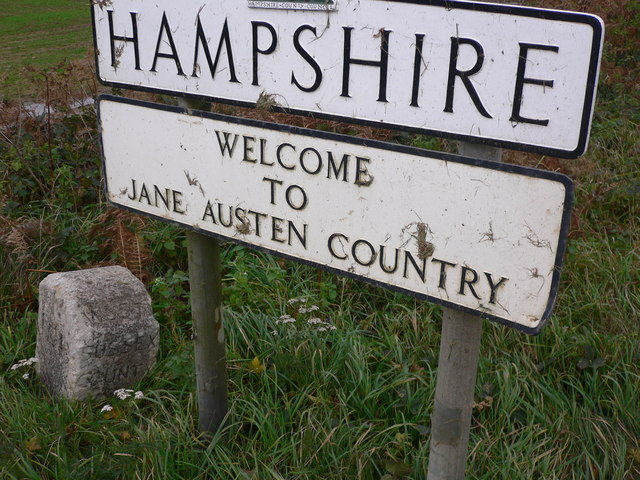
Which county did your ancestors come from? Of all your genealogical discoveries and challenges, you probably don’t give this one a second thought. Does it matter? And how did a county become a county?
Our counties weren’t planned by committee from above but created piecemeal, mostly 1,000 years ago in Anglo-Saxon England, at a time when England was becoming England. The
counties can be divided into four or five broad categories:
The Wessex shires e.g. Hampshire, Wiltshire
The south and east: Former kingdoms (e.g. Kent, Cornwall) and the contested territories around London (e.g. Middlesex, Surrey). These counties do not have -shire as part of their name (though not every county without -shire belongs in this group).
The centre: As Wessex took over Mercia or regained land from the Danes, it created counties named after the principal town e.g. Stafford-shire, Nottinghamshire.
Yorkshire and Lincolnshire are combinations of categories 2 and 3. Yorkshire was formed from the former Viking kingdom of Jorvik and first recorded by that name in 1065. Similarly, Lincolnshire was named after Lincoln, but also took in the old kingdom of Lindsey. Both were divided into separate parts or ridings.
The northern edges: Counties created after the Norman Conquest and often formed from great lordships e.g. County Durham, Lancashire. (Rutland is in the Midlands, but as a former royal estate also fits this category description.)

These different origins mean many counties have their own deep-rooted identity and customs. For example, the former kingdom of Kent is one of the oldest counties in England. The story is that the men of Kent won an important concession from William the Conqueror - Kent could keep its own custom of gavelkind (equal inheritance between sons) instead of the Norman primogeniture (inheritance by the eldest son). Gavelkind continued as the dominant way of inheriting land in Kent until 1925, so certainly relevant to genealogists, particularly when looking at documents like wills and deeds.
In what other ways does the county matter in genealogy?
First and most obviously, counties help identify a parish’s geographical location – to distinguish a Swindon in Wiltshire from two Swindon villages in Gloucestershire and Staffordshire.
Secondly, local records are now largely held in county record offices. This is partly because counties were once units of justice and government. For many of our ancestors, government beyond their parish meant the county. Quarter sessions were held in each county (or county divisions like the Yorkshire ridings and parts of Lincolnshire) and dealt with county business like licensing, highway repair and the county gaol. The county also raised the militia. It therefore made sense to hold these and other local records in the county record office.
But the county wasn’t the only way of dividing up the country. You may have used the records of church courts, which dealt with moral offences, issued marriage licences, and until 1858, even administered wills. And the church effectively drew its own map, disregarding county boundaries entirely. For example, at different times, the Diocese of Salisbury, centred around the cathedral, took in parishes from Wiltshire, Dorset and Berkshire, and its records are held at the Wiltshire record office. If your'e researching an ancestor in the village of Chardstock, Devon, the local wills are in Wiltshire.
And by the 20th century, this way of organising and governing the country was coming under strain. Towns had spread beyond their old county boundaries and people commuted, shopped and built homes across them. The Local Government Act 1972 aimed to bring towns and the countryside together, and create counties big enough to deliver modern services such as education and policing. New counties appeared such as Avon and Cleveland, although they didn’t last long. Many areas have unitary authorities, while counties are largely kept for ceremonial and historic purposes.

It seems 20th century meddling couldn’t erase 1,000 years of historical identity. For example, rivers often serve as natural county boundaries. So Berkshire’s border with Oxfordshire historically followed the River Thames. Yet in 1974 the border changed and the northern towns moved into Oxfordshire. Berkshire lost the Uffington White Horse - the county emblem and the badge of the Berkshire Yeomanry. One local man also remembers how his father “was very proud to be born in North Berkshire...His regret when he passed away was that he didn’t want to pass away in Oxfordshire, but unfortunately the John Radcliffe [Hospital] is in Oxfordshire.”
How much does county identity matter? One campaigner suggests that "the further you get away from the M25, the more important counties become. It's in places like Yorkshire, Cornwall and Durham that they matter most." This is true for my own father, born in the North Riding of Yorkshire in the 1950s. In his case, the historic boundary was the River Tees - thought to be the limit of the former Viking kingdom, so the dividing line between Yorkshire and Durham.
But in post-war industrial Teesside, the river as a jurisdictional boundary didn’t work. The ironworks and chemical plants were on both banks, and separate jurisdictions made it difficult to plan infrastructure and local services. In 1968, towns on both banks were merged into one county borough, Teesside. The name and boundaries changed to Cleveland in 1974. And again – to Stockton-on-Tees in 1996.
For Dad, born south of the river, these names don’t matter: “The council uses the name [Cleveland]. Not sure what it is called now. Gets changed all the time. You had Cleveland police not sure if it’s called that anymore can’t keep track of it all.”
He considers himself Yorkshire: “River Tees - one side is Durham the other is North Yorkshire…Victoria Bridge takes you from one to the other…”

And this identity matters to him, especially when it comes to football: “We saw Leeds as our rivals rather than Sunderland and Newcastle [to the north]. I’d travel to Leeds, but I’d never think of going to them other clubs. Been to Newcastle once.”
So the next time you write an ancestor's county on your family tree, you might think about what it means behind simple geography: Is the parish in a different county than it is today? What is this county's history and how could it affect your research? And how was this county identity, or other regional identities, important to your ancestor?
Tip for your research: Use FamilySearch’s England Jurisdictions 1851 map or the Phillimore Atlas and Index of Parish Registers to check your parish’s county, diocese and other historic jurisdictions.
Sources and further reading
Cheshire Archives, Quarter Sessions
Nimmo, Bethan, "Berkshire and Oxfordshire boundary debate still rages 50 years on", BBC Local News, 11 Mar 2024
Reading Evening Post, “Bringing Berkshire back to its home”, 27 Sep 1986 (via Findmypast)
Sandford, Mark, Long shadows: 50 years of the Local Government Act 1972 (House of Commons Library, 2022)
Tate, W. E., The Parish Chest
Youngs, Frederic A., Jr, Guide to the Local Administrative Units of England, vol. I: Southern England (London: Royal Historical Society, 1979); vol. II: Northern England